August 2026 Knowlesletter, by Victor Knowles

APPEAL TO HEAVEN

     07/01/2026 10:00 AM

|

7 min read

July 2026 Knowlesletter, by Lincoln Knowles

SWEET FREEDOM'S SONG

     07/01/2026 09:00 AM

|

7 min read

July 2026 Knowlesletter Viewpoint, by Victor Knowles

INTIMACY ALONG THE EVERLASTING WAY

     06/01/2026 10:00 AM

|

7 min read

June 2026 Knowlesletter, by Lincoln Knowles

THE CHALK LINE SISTERS

     06/01/2026 09:00 AM

|

7 min read

June 2026 Knowlesletter Viewpoint, by Victor Knowles

FIRST PURE, THEN PEACEABLE

     05/01/2026 10:00 AM

|

8 min read

May 2026 Knowlesletter, by Lincoln Knowles

NONDENOMINATIONAL!

     04/01/2026 10:00 AM

|

8 min read

April 2026 Knowlesletter, by Victor Knowles

HALLELUJAH! & AMEN!

     03/01/2026 10:00 AM

|

7 min read

March 2026 Knowlesletter by Lincoln Knowles

LIVING AMONG THE LAWLESS

     03/01/2026 09:00 AM

|

7 min read

March 2026 Knowlesletter Viewpoint, by Victor Knowles

MEEKNESS: A FLOWER FROM THE ASHES OF SELF-LOVE

     02/01/2026 10:00 AM

|

7 min read

February 2026 Knowlesletter, by Lincoln Knowles

RESOLVE TO MAKE EVERY EFFORT

     01/01/2026 10:00 AM

|

7 min read

January 2026 Knowlesletter, by Lincoln Knowles

01Jul

Summer 2026 One Body, Special feature

In A Great Awakening, a film based on real events, Benjamin Franklin tells his grandson Benny the story of his friend George Whitefield, the famous traveling evangelist of the Great Awakening in America. Using Franklin’s own terms for describing headlines in his newspaper, Benny asks his grandfather, “George Whitefield – was he soothe or stoke? To which Franklin did not choose, but rather, with a smile of remembrance, replied, “Yes.” Indeed, Whitefield could either soothe or stoke the heart of the listener.    

Franklin proceeds to tell, and the film shows, how Whitefield began as a poor, aspiring English actor who had no faith but ended up at Oxford, where he was befriended by John and Charles Wesley (and others from Oxford’s Holy Club) and was converted. The film shows Whitefield struggling soon after his conversion, overzealous in his deeds and in his fasting. His Holy Club friends remind him that God was “well-pleased” with Jesus not because of His works, but at His baptism. It is then that George is obedient in baptism and becomes full of the Spirit.    

Earlier in the story, while George is still a thespian, there is a scene where Whitefield’s acting coach and mentor reminds him of the importance of projecting loudly and clearly. “Remember the source of your power. When the time comes, let them have it!” That time will come, though not as an actor on stage but as a preacher on fire.    

Whitefield becomes a minister in the Church of England, and there is a memorable scene where he is about to step up to the pulpit as a guest preacher in a stuffy church. One of the priests whispers to George, “I’m very sorry to see you here, Mr. Whitefield,” whose reply was, “So is the devil.” The young preacher begins his sermon by crumpling his manuscript and giving an anecdote at the expense of the old preachers. It is then that he lets them have it, so to speak. Declaring loudly, “I will not be a velvet-mouthed preacher,” Whitefield pounds the pulpit, removes his wig, and cries out, “Do not be deceived! You may have a religious head and yet have the devil in your heart!” Then, drawing comparisons between Nicodemus, the church at Sardis, and the stale church he was preaching in, he echoes Jesus: “You must be born again!” As Franklin tells his grandson, “The Church of England was not ready for an awakened George Whitefield.” Indeed, the church bans Whitefield from preaching, so he takes off, traveling on horseback and eventually by ship to America, preaching with passion to everyone, regardless of parish.    

When Whitefield arrives in Philadelphia in 1739 and is about to step out onto the courthouse balcony to preach to the excited thousands below, who have heard of the preacher’s acclaim, he prays, “Father, tear down the name of Whitefield if it means that your name remains.” He then launches into a sermon on the freedom, wisdom, and mystery found in Christ. While the crowd is taken by his every word, Franklin – ever the scientist – is shuffling around, trying to compute the exact range and reach of Whitefield’s powerful voice. Franklin is more interested in how many people can hear the preacher than he is in actually hearing the Word himself, even as Whitefield declares, “The fear of Him is the beginning of knowledge.”    

A Great Awakening shows us the spiritual awakening of the American colonies prior to their political awakening and the Revolution. It takes us inside the real-life friendship of a preacher and a printer, a man of faith and a man of reason. And while it doesn’t show us a conversion of the deist Franklin (despite Whitefield’s influence and personal urgings), the film, which is bookended by the events of the Constitutional Convention in 1787, ends with Franklin’s famous “Address on Prayer” – a plea for the delegates to bring back the practice of daily prayer in the assembly, arguing from scripture that “unless the Lord build the house, they labor in vain that build it.” After his speech, Franklin sits and remembers Whitefield’s words: “My friends, do you want to be free? Liberty is found in Him alone! Do you want to live? He alone gives eternal life! I beseech you, do not reject so great a gift. A great awakening has come. Arise, O sleeper. Awaken!” ~ LK



Read More  
01Jul

Summer 2026 One Body, Editorial


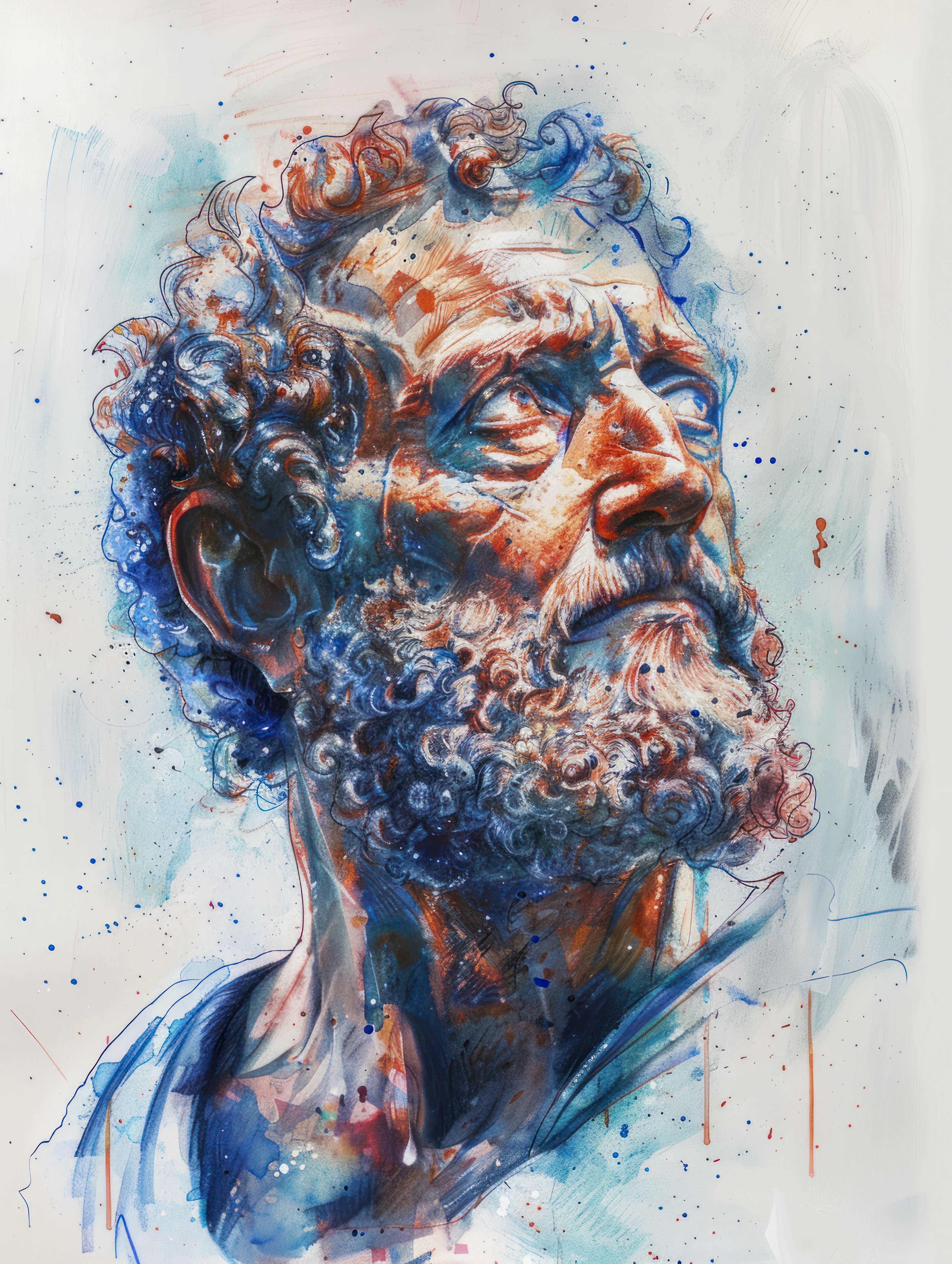
I like the guy on the cover of this issue of One Body. He appears to be a bit of an Everyman, a citizen from anywhere and from anytime. He could be an American, contemplating the semiquincentennial celebration of his country. He could be one of the revolutionary forebears from any number of countries. Too, he could be a citizen of the Greco-Roman world. Or perhaps he is an ancient Israelite. His face shows courage, though with a hint of vulnerability. He seems capable, but in search of wisdom. He is confident, albeit concerned. I think he loves his country. 


In Acts 17:26-27, Paul refers to another everyman, Adam, when he wrote that God “made from one man every nation of mankind to live on all the face of the earth, having determined allotted periods and the boundaries of their dwelling place, that they should seek God, and perhaps feel their way toward him and find him.” Beyond pointing out our shared ancestry and our human dignity that comes from being created in the image of God, these verses highlight God’s sovereignty over all nations in every era – and, by extension, the citizens thereof. God has planted me in this land, and I will love it and strive to thrive in it, even as I seek Him. I will be civic-minded and patriotic, but also salvation-minded and pacific. I will always seek the face of God and the place of God, knowing that “here we have no lasting city, but we seek the city that is to come” (Hebrews 13:14). In His sovereignty, the Lord has given us our earthly citizenship; in His love, He has beckoned us to our heavenly citizenship.   

In this issue, you will find twelve articles on the theme of The Citizen. Each article is distinct in its focus, but in each there is consideration of our dual citizenship – our roles here as we prepare for our eternity there, our often awkward and paradoxical positions of being at once a citizen and an alien. It seems that our call to Christian stewardship demands that we not only judiciously manage our resources and selflessly employ our talents, but also wisely tend to our communities. In “The Primacy of Christ,” Leonard Andrie connects this aspect of stewardship, this calling, to the Lord’s Prayer. He says that when we petition God for His will to be done on earth as it is in heaven, we essentially ask Him to give us leaders “whose ways of thinking, relating toward, and serving the democratic body best reflect the beauty and reality of heaven,” and that we thus have the duty to “strive to help build a culture of justice and love that is perfectly expressed in heaven” (Evangelism & Culture, Fall 2024). 

On pages eight and nine of this issue, Dr. Mark Scott writes on “Leveraging Your Citizenship for the Gospel.” In his article, he says, “A Christian is a member of two kingdoms – one from above and one from below. Since the believer is a citizen of heaven, should not that believer be the best citizen on earth?” I believe the answer should be “Yes!” If we are to shine like stars in the sky or bright lights in the world (Philippians 2:15) and maintain honorable conduct among the non-believers (1 Peter 2:12), then shouldn’t our citizenship, which God gave to us, be part of that brilliant reflection? Should it not be part of our salt and our light? 

Jesus, in the Sermon on the Mount, gives us a glimpse of what the Kingdom citizen should look like: coming in our spiritual poverty to hunger and thirst for His righteousness, out of which comes our demonstrated love for those around us. Jesus has given us spiritual direction with a heart-understanding of His law. And God has given each of us our gifts and talents, from which we make our living and from which we create and sustain in the time and place that God has given us. 

The Christian citizen, even while seeking the kingdom of God, should be decidedly and demonstrably virtuous, as virtue must uphold the civic arena in which God has placed us. The American founding fathers understood that. John Adams said of the Constitution that it was good “only for a moral and religious people. It is wholly inadequate to govern any other.” Benjamin Franklin knew that “Only a virtuous people are capable of freedom.” The bright and salty Christian ought to be Christlike, while living the cardinal virtues of prudence, justice, courage, and temperance. He ought to bear the virtuous spirit-fruit of love, joy, peace, patience, kindness, goodness, faithfulness, gentleness, and self-control. He ought to be orderly, industrious, generous, dutiful, and responsible. He ought to love his land and his fellow man, all the while faithfully plowing for truth, goodness, and beauty in God’s world – the place from which we seek Him, feel our way toward Him, and find Him.

Read More  
01Aug

August 2026 Knowlesletter, by Victor Knowles

Not only are we celebrating the 250th anniversary of America’s independence in 2026, but we are also celebrating the 225th anniversary of the Cane Ridge Revival – the birth of the Second Great Awakening, and also what some scholars see as the beginning of the American Restoration Movement, both of which took place August 6-12, 1801, near Paris, Kentucky. In his book Christians Only, James DeForest Murch said, “This major phenomenon in American church history prepared the way for the Restoration Movement” (The Great Awakenings and the Restoration Movement, Max Ward Randall, College Press, 1983).       

The Cane Ridge Revival of 1801 may have been what I call “America’s Pentecost.” It was not the first revival to sweep the nation, because the Great Awakening took place from 1740-1745, in large part because of the preaching of the British evangelist George Whitefield, who made seven trips to America (see Lincoln’s movie review of A Great Awakening in the Summer issue of One Body).  However, the Cane Ridge Revival was certainly one of the most unique revivals to ever take place on American soil.    

The Kentucky revival attracted between 20,000 and 30,000 people in only one week. This was no small feat considering the primitive methods of travel and lodging at the turn of the nineteenth century. One historian has estimated that nearly 10 percent of the recorded population of Kentucky in 1801 was at Cane Ridge at one time or another during that week.    

The storied revival took place in Bourbon County on the spacious church grounds of the Cane Ridge Meeting House. Some say it was the largest one-room log building on the North American continent. At that time, the congregation was part of the Presbyterian Church and was led by its irenic and unity-minded minister, Barton W. Stone.    

Folks began arriving for the scheduled weekend services on Friday, August 6, 1801. They came by horseback and wagons. The 400-seat church was quickly filled. Not even the rain dampened the spirits of the worshipers who came. The next day, the growing crowd, which had swelled to about 20,000 worshippers, included several hundred Negroes, spread into a grove of trees owned by a Methodist. A covered platform was erected where various preachers of differing persuasions could address the audience. Some services were held in the log church while others were conducted from the platform or in other parts of the campground on tree stumps or wagon seats.    

A singular event made the Cane Ridge Revival unique in the annals of American revivalism – the amazing unity of those who were doing the preaching. Stone had invited Methodists and Baptists to join the Presbyterians in preaching. At least one participant counted seven ministers, all preaching at the same time, in different parts of the encampment. Hundreds of “exhorters” were also seen and heard at Cane Ridge. In this sense, one is reminded of the Day of Pentecost when the apostle Peter stood up with the eleven (Acts 2:14) and preached and exhorted people to “be saved from this crooked and perverse generation” (v. 40). Incredibly, three thousand converts were reported at Cane Ridge – the same number as at Pentecost (v. 42).    

Brother Stone testified: “We all engaged in singing the same songs of praise, all united in prayer, all preached the same thing – free salvation urged upon all by faith and repentance.” Stone also said, “With astonishment did I hear men, women, and children declaring the wonderful works of God, and the glorious mysteries of the gospel.” He further stated that he was amazed at “the knowledge of the gospel displayed.” Critics, of course, summarily dismissed these “religious exercises” of weeping and rejoicing as pure fanaticism, but others believed them to be genuine evidence of the convicting power of God’s Word as on the Day of Pentecost – when they stood, prayed, sang, and preached as one and thousands were “cut to the heart” (Acts 2:37) about their sins.    

Note: On September 26, from 10:00 AM to 4:00 PM, Kentucky Christian University will sponsor a 225th Anniversary Celebration of the Great Cane Ridge Revival. There will be period reenactors, children’s activities, hymn singing, food trucks, vendors, and a special guest speaker, Barton W. Stone (played by Dr. Richard J. Cherok, Managing Editor of Christian Standard and former director of POEM).  


Read More  
01Jul

July 2026 Knowlesletter, by Lincoln Knowles

The other day, I was preparing dinner when I mentioned to my daughter, Catelyn, that I didn’t have an idea yet for this month’s newsletter article. She said that she would write it and went to her room. I laughed it off and went back to work. By the time dinner was ready, she came into the kitchen and read to Jenny and me what she had written.

"This year, as most of you know, is the 250th anniversary of the United States of America. Like with any anniversary, we reflect on the years gone by: where and how it all started, what has happened since, etc. We even try to learn from the experiences of our founding fathers. Something that has always stood out to me from the Revolutionary War is the phrase “An Appeal to Heaven.” It was adopted by George Washington just before the war and placed on a new “revolutionary” flag, a symbol of resilience and resistance. Although our current circumstances are not the same as the people of 1776, an appeal to heaven is and always will be our best defense and our best stand against our trials. This is true for nations and for individuals. 

The winds of troubled times will surely come, and whether you remain fast depends on who you anchor your life to. I am reminded of Job and the fact that even after everything that happened to him, he could have easily tried to rebuild his life by relying on himself instead of on God. After all, didn’t God put Job in this new place?  Job chose to ask God, “Why?” He chose to seek comfort in God’s wisdom. Later, it says in Jeremiah 29:13-14, “You will seek me and find me when you seek me with all your heart. I will be found by you, declares the LORD, and I will restore your fortunes.” Job appealed to God and found him, and Job was reminded of the greatness and compassion of our God, who rebuilt for Job and made things better than ever imagined. 

As we go through life, we will undoubtedly face hard times, and we may put up a good fight, have all the advantages and tools needed to win, or maybe we will be the underdog with no one on our side. However, the battle belongs to the Lord. We see this in the Revolutionary War and in the benefits that we reap because God shifted the tide of events and circumstances. America would not be here without God’s intervention. Let us remember the significant way God orchestrated America’s founding and remember that the same God who answered Job is waiting to be found by us, waiting for our appeal and our plea to Him. So, let’s make an “Appeal to Heaven” asking God for guidance for the next 250 years, and let us build a firm foundation in the Lord for future generations to stand upon."

Of course, she is right. God is our best defense in times of trouble; individuals and nations should seek Him – even as we trust Him and remember His providence. I also like Catelyn’s choice of Revolutionary slogans. Long ago, I read about the many flags and banners of the colonial and revolutionary period and was intrigued by Washington’s flag and the bold words emblazoned on it. Sadly, there are some today who disdain this flag, its message, and any who believe in it. Their myopic view of history and their zeal to label legitimate dissent as insurrection lead them to blindly scorn what is actually a beautiful, profound, and widely accepted idea (albeit a broad one) – that God is ultimate. That idea is true, as my daughter said, for individuals and for nations.

“An appeal to heaven” comes from Two Treatises of Government (1689), by John Locke, an English political philosopher familiar to the well-educated founding fathers and whose ideas pervade the Declaration of Independence and the U.S. Constitution. In the treatises, written in a different political climate and some 85 years before the American Revolution, Locke lays out the ideas of natural rights, the social contract, and the consent of the governed. Locke says of the rights-deprived group or individual who has “no appeal on earth” that “they have a liberty to appeal to heaven.” Elsewhere, Locke writes, “. . . they may appeal, as Jephtha did, to Heaven . . .” (see Judges 11). All of this is, indeed, in the context of the social contract having been repeatedly broken and of the need for it to be restored, but Locke makes it clear that he is not talking about whimsical anarchy. His point is that people do have “a law antecedent and paramount to [the] laws of men.”

The meanings of most words, phrases, and ideas change over time. While “an appeal to heaven” originally propelled political theory and fostered the spirit of the Declaration and its founders, the colonial patriots and the Continental Army drew encouragement and fighting strength from its reference to ultimate and divine authority and power. For many Christians today, the moral, legal, and political connotations of appeal have been replaced by a spiritual connotation – prayer. In that sense, it is not our right, but rather our privilege to appeal to our Father in heaven, not only in times of crisis or turbulence, but also when we thirst for wisdom, forgiveness, healing, or encouragement. When they call on me, I will answer; I will be with them in trouble. I will rescue and honor them. (Psalm 91:15 NLT)


Read More  
01Jul

July 2026 Knowlesletter Viewpoint, by Victor Knowles

There is nothing wrong with America that a return to her native songs would not fix. The moral and spiritual fabric of America was woven into eight deeply spiritual national and patriotic songs written between 1814 and 1918. First, there is our National Anthem, “The Star-Spangled Banner.” Celebrities, at the beginning of sporting events, have never sung the final stanza. It would be like a “bomb bursting in air” for them to sing, as Francis Scott Key wrote: “Blest with vict’ry and peace, May the heav’n-rescued land Praise the Power that hath made and preserved us a nation.” That stanza ends with “And this be our motto – ‘In God is our trust!’”    

In this “sweet land of liberty,” let us not forget the final stanza of Samuel F. Smith’s “My Country, ‘Tis of Thee” (1831) in which God is exalted as the one true author of liberty and reigning King of our country. “Our fathers’ God, to Thee, Author of liberty, To Thee we sing: Long may our land be bright with freedom’s holy light; Protect us by Thy might, Great God, our King!”    

Julia Ward Howe wrote “The Battle Hymn of the Republic” (1861) that opens with “Mine eyes have seen the glory of the coming of the Lord.” The next stanza begins “I have seen Him in the watch fires of a hundred circling camps.” The third stanza says, “He is sifting out the hearts of men before His judgment seat” and ends with a triumphant “Our God is marching on!” The final stanza says, “In the beauty of the lilies Christ was born across the sea, With a glory in His bosom that transfigures you and me. As He died to make men holy, let us die to make men free, While God is marching on!”   

“Eternal Father, Strong to Save” has been The Navy Hymn since 1869. It begins, “Eternal Father, strong to save, Whose arm hath bound the restless wave, Who bidd’st the mighty ocean deep, Its own appointed limits keep, O hear us when we cry to Thee, For those in peril on the sea!” The author, William White, devotes the next two stanzas to Christ and the Holy Spirit.    

Then there is our National Hymn, “God of Our Fathers” (1876). Daniel C. Roberts speaks reverently of God’s almighty hand and implores us to make Him to be “our strong arm and sure defense.” Can you imagine the joy it would bring to God to hear citizens of this great country “singing with the spirit and the understanding” the second stanza? “Thy love divine hath led us in the past, In this free land by Thee our lot is cast, Be Thou our Ruler, Guardian, Guide and Stay, Thy word, our law; Thy paths our chosen way.”    

One of our most beloved songs is “America the Beautiful” (1893). Katharine Lee Bates describes the natural beauty and wonders of America that we all enjoy and appreciate – spacious skies, amber waves of grain, purple mountain majesties, valor and visions of pilgrims’ feet, heroes proved in liberating strife, and patriot dreams. Three times, Bates calls upon all Americans to acknowledge Almighty God as the true source of blessing and bounty. (1) “America! America! God shed His grace on thee, and crown thy good with brotherhood from sea to shining sea.” (2) “America! America! God mend thine every flaw, Confirm thy soul in self-control, Thy liberty in law.” (3) “America! America! May God thy gold refine, Till all success be nobleness, And every gain divine.” I believe if all America would acknowledge God as the source of blessing, that her sin-blasted cities could become those gleaming “alabaster cities, undimmed by human tears.”   In 1912, Henry Van Dyke wrote a wonderful song imploring God to “befriend” America. “O Lord, our God, Thy mighty hand hath made our country free; from all her broad and happy land may worship rise to Thee. Fulfill the promise of her youth, her liberty defend; By law and order, love and truth, America, America, befriend!”     

Irving Berlin first wrote “God Bless America” in 1918 and then revised it in 1938. “God bless America, land that I love! Stand beside her, and guide her, through the night with a light from above. From the mountains to the prairies, to the oceans white with foam, God bless America, my home sweet home!” Since the terrorist attack on America in 2011, this song has been sung during the 7th inning stretch at every baseball game played in Yankee Stadium in New York.    

Americans don’t sing much anymore. Many are too busy watching celebrities and wannabes sing on TV or just listening to worship teams dominating the singing at church. However, it does not have to be this way. We can turn things around. If schools and churches will not do it, you do it! Find some old songbooks that still contain the rich heritage of our nation and start singing. Teach these national treasures to your children and grandchildren. 

Read More  
01Jun

June 2026 Knowlesletter, by Lincoln Knowles

How well-known do you want to be? I’m not referring to fame or visibility but rather transparency, vulnerability, and authenticity. Not only that, but who gets to see it? Often, we don’t even want to see ourselves clearly and honestly, let alone be truly seen by others, even those closest to us. What about being seen and known by God? Hebrews 4:13 says that “no creature is hidden from his sight, but all are naked and exposed to the eyes of him to whom we must give account.” Is that a little frightening to you, as it is to me? Too intimate?      

I hope that you will read the article on page three of this newsletter, written by my friend, Marj, who was the director of our local adult literacy center during the short time I volunteered there. Here, she writes about God’s intimate knowledge of us as described in Psalm 139, and how we should welcome it and take advantage of it by listening to Him.      

I hope, too, that you read Psalm 139 in its entirety, as Marj encourages you to do. In the psalm, David poetically depicts God’s omniscience, omnipresence, and omnipotence – all in loving relation to our being and even our creation. It is humbling – don’t you think? – to be so well-known and still so well-loved. George MacDonald wrote that “to have been thought about, born in God’s thought, and then made by God, is the dearest, grandest and most precious thing in all thinking.” Of course, God continues to consider us and create in us even after our birth.      

It seems that we have two possible responses to such intimate knowledge that God has of our spiritual nakedness. Our instinctive, pride-driven response is to close (and clothe) ourselves and try to hide from God, just as we tend to hide from others and even ourselves. Ask Adam and Eve how that went. “I heard the sound of you in the garden, and I was afraid, because I was naked, and I hid myself” (Gen. 3:10). Those fig leaves from the garden are not much different from our attempts at self-righteousness, by the way. A better response is shared by David in verses 23 and 24 of Psalm 139: “Search me, O God, and know my heart! Try me and know my thoughts! And see if there be any grievous way in me, and lead me in the way everlasting!” These final verses of the psalm seem to echo the first one (“you have searched me and known me”). Not only that, they serve as an acknowledgement that God’s searching and knowing of us is actually a good thing – not frightening or too intimate.      

It was said of David that he was a man after God’s own heart (1 Sam. 13:14, Acts 13:22), and here David is not daunted by the “omni-ness” of God; he wants to make sure that he is not like the wicked men he had asked God to slay in the preceding verses. He wants to be righteous, to be led in God’s everlasting way, so he embraces his vulnerability and invites God to inspect him, to assess his heart and his mind. Later, Jeremiah will write, “The heart is deceitful above all things, and desperately sick; who can understand it?” The prophet then answers his own question with words from God: “‘I the LORD search the heart and test the mind’” (Jer. 17:9-10). Samuel wrote, “The LORD sees not as man sees: man looks on the outward appearance, but the LORD looks on the heart” (1 Sam. 16:7). Of course, David knows this; at another time, he asked of God, “Create in me a clean heart . . . renew a right spirit within me” (Psalm 51:10).      

This heart and spirit renewal always requires God’s discernment. Charles Spurgeon wrote of Psalm 139: “The Lord judges our active life and our quiet life. He discriminates our action and our repose, and marks that in them which is good and also that which is evil. There is chaff in all our wheat, and the Lord divides them with unerring precision.” So, here at the end of Psalm 139, David needs his chaff removed, just like we do. We need good and evil to be separated. If we want evil to be punished (Psalm 139:19), for His winnowing fork to do its work in judgment upon the sinful world (Matt. 3:12), then we need to invite God to discern, divide, and dispose, to remove all that would prevent us from walking in the everlasting way (Psalm 139:24).      

Ultimately, David desires to be guided by God. “Lead me in the way everlasting,” he writes. What does that look like, David? Perhaps it looks like Proverbs 3:5-6. “Trust in the LORD with all your heart, and do not lean on your own understanding. In all your ways acknowledge him, and he will make straight your paths.” We can also be led in the everlasting way by following the Son of David – the everlasting Jesus Christ, who said of Himself, “I am the way, the truth, and the life. No one comes to the Father except through me” (John 14:6). Finally, we can be searched, known, and led in the everlasting way by daily reading the Word. “For the word of God is living and active, sharper than any two-edged sword . . . discerning the thoughts and intentions of the heart” (Heb. 4:12). When we open our Bibles, we invite God’s close inspection and clear direction.

Read More  
01Jun

June 2026 Knowlesletter Viewpoint, by Victor Knowles

Robert Louis Stevenson, in his non-fiction travel book Edinburgh: Picturesque Notes (1878), wrote about two unmarried sisters who shared a single room. Sadly, the sisters had a falling out, which Stevenson said was “on some point of controversial divinity” – so much so that they never spoke to each other again! There were no words, either kind or spiteful. Just stone-cold silence.    

You would think that they would have separated, but nothing of the sort happened. Perhaps it was because of a lack of financial means, or of an innate Scottish fear of scandal, that they continued to keep house together in a single room. A chalk line was drawn across the floor, which separated the two domains. It divided the doorway and the fireplace so that each could go in and out and do her own cooking, without invading the territory of the other.    

For years, they coexisted in hateful silence. Their meals, their baths, even their family visitors were exposed to the other’s unfriendly silence. And at night, each went to bed listening to the heavy breathing of her enemy. Thus, the two sisters (ostensibly daughters of the same church) continued the rest of their miserable lives. (From “Discover the Word,” February 8, 2013).    

I guess you could chalk up this story to any number of things. Pride would probably top the list. Each sister was proud of her theological understanding on whatever the point of difference was. The church in Corinth was divided over meat offered to idols. Paul wrote, “No about food sacrificed to idols: We know that ‘we all possess knowledge.’ But knowledge puffs up while love builds up” (1 Cor. 8:1). Pride of knowledge on some issue can cause us to reach for the chalk and draw a line down the very center of the church.    

Selfishness would have to be added to the “chalk it up” list. A man named Diotrephes was selfish to the core. John warned about him, saying, “he loves to be first” (3 John 9). Everything had to go his way, or out came the chalk. Not only did he “gossip maliciously” about the apostle John, but he refused to welcome other Christian brothers. “He also stops those who want to do so and puts them out of the church” (v. 10). Some “chalk artists” do the same today. “It’s my way or the highway for you!” Is there a Diotrephes in the house?    

Personal preferences in matters of opinion can also make the chalk talk. Churches have divided for years because some prefer this and others prefer that, from music to meals to ministers. In the church in Rome, a chalk line threatened to separate the bellicose broccoli brothers from the militant ministers of meat. Paul told folks on both sides to erase the chalk line. “One person’s faith allows them to eat anything, but another, whose faith is weak, eats only vegetables. The one who eats everything must not treat with contempt the one who does not, and the one who does not eat everything must not judge the one who does, for God has accepted them” (Rom. 14:2-3). Who am I (and who are you) to reject someone whom God has received?    

There were actually two surly sisters in Scripture who could not seem to agree with each other. Their names were Euodia and Syntyche, and they were living on opposite sides of their chalk line. (Someone nicknamed them “Odious” and “Soon Touchy.”) We do not even know what it was that they could not agree upon! This sad situation existed in the church in Philippi. Paul was extremely distressed over this sorry situation and found it necessary to include their names in a church letter. “I plead with Euodia and I plead with Syntyche to agree with each other in the Lord” (Phil. 4:2). How would you feel if your name were read aloud in a church letter for being a problem in the congregation? Embarrassed? Ashamed? I would think so. Paul even had to ask one of his yokefellows (some say his name was Szygus) to “help these women who have contended at my side in the cause of the gospel” (v. 3). What amazing irony! At one time, these two sisters in Christ had “contended for the faith” right alongside the great apostle Paul, but now they were kicking up the chalk dust, reduced to being contentious with each other over who knows what!    

I hope good old Szygus took their piece of chalk away. I surely hope the two sisters in Philippi made peace, got down on their knees, and scrubbed away the chalk line. I hope they started loving each other once again and began “contending for the faith” instead of being contentious with each other and drawing childish chalk lines over who knows what. Friends, when we decide to agree with each other in the Lord, there is no need for any more chalk talk, chalk walk, or chalk lines in the church. Chalk one up for the Lord Jesus when you can divest yourself of pride, selfishness, and personal preferences; gladly accept those whom God has accepted; and plunge into the great work of contending for the faith! In essentials, unity; in opinions, liberty; in all things, love.

Read More  
01May

May 2026 Knowlesletter, by Lincoln Knowles

“But the wisdom from above is first pure, then peaceable, gentle, open to reason, full of mercy and good fruits, impartial and sincere. And a harvest of righteousness is sown in peace by those who make peace.” James 3:17–18 

Why is it that we are so prone and quick to bicker and quarrel among ourselves? Whether online with strangers or with co-workers, family, neighbors, church members, or even other churches, it seems that we are too often ready to wage our war of words at the proverbial drop of a hat. G. K. Chesterton said, “People generally quarrel because they cannot argue. And it is extraordinary to notice how few people in the modern world can argue. This is why there are so many quarrels, breaking out again and again, and never coming to any natural end.” James, on the other hand, says, in the first verse of the fourth chapter of his letter, that we fight and quarrel because of our innate desires, passions, lusts, pleasures, or cravings (various translations). While Chesterton laments that we cannot argue properly (that is, disagree with reason and engage in logical debate that leads to greater understanding), James suggests that our selfish nature leads to divisive quarreling. Both men are correct, of course; we cannot disagree peacefully and productively while our hearts and minds are driven by our self-centered application of earthly “wisdom.”    

The book of James is considered not just an epistle but also a primer on practical Christianity – a book of post-resurrection wisdom. “If any of you lacks wisdom, let him ask God, who gives generously to all [who] ask in faith,” (1:5-6) says James, echoing Proverbs 2:6 – “For the LORD gives wisdom; from his mouth come knowledge and understanding.” The Bible is clear that wisdom comes from God, even indicating that wisdom was there at Creation (Proverbs 8:22). Both Matthew (12:42) and Luke (11:31) record Jesus declaring His wisdom to be greater than that of Solomon, who himself had asked for, and received from God, heavenly wisdom (1 Kings 3:9). Paul reinforces the Christ/Wisdom connection, writing that He was “the power of God and the wisdom of God” and that He “became to us wisdom from God, righteousness and sanctification and redemption” (1 Corinthians 1:24, 30).    

In James 3, two kinds of wisdom are contrasted. In verses 14-15, James describes the ugliness of worldly wisdom and its effects: bitter jealousy, selfish ambition, boasting, and falseness. James calls this “wisdom” – in increasingly pejorative terms – “earthly, unspiritual, demonic.” James says, “For where jealousy and selfish ambition exist, there will be disorder and every vile practice.” Next, James describes Godly wisdom. Having already declared in verse 13 that the wise man conducts himself “in the meekness of wisdom,” James sets forth a picture of that wisdom in verse 17: “But the wisdom from above is first pure, then peaceable, gentle, open to reason, full of mercy and good fruits, impartial and sincere.”    

Before looking closer at James’ depiction of heavenly wisdom, consider that James began chapter 3 by writing evocatively about the need to tame the tongue. Our selfish ambitions and bitter jealousies become evident in our speech. Not lost in these verses is the effect of our quarrelsome words on others. If the tongue corrupts or stains the whole body (3:6), what do our foolish and selfish words do to other members of Christ’s one body – the church? When my lazy mind and my selfish heart cause my mouth, which I use to praise and bless the Lord, to disparage my brother who is “made in the likeness of God” (3:9), what effect does it have? How is that the meekness of wisdom? How is that good for the Body?    

James says in verse 8 that “no human being can tame the tongue,” but it seems like he is suggesting at the end of the chapter that the meekness of wisdom that comes from God can control the tongue. There is a Beatitudes-like quality to the description of Godly wisdom in James 3:17. The wisdom from above is: First pure: Like the purity of heart that Jesus called for from his followers, wisdom from above is not merely free from defilements; it is full of integrity and God-centeredness. It is 100% for His purpose and from His truth. Then peaceable: “If possible, so far as it depends on you, live peaceably with all.” (Romans 12:18) Gentle: Meekness leads to kindness. Gentle wisdom is well-received. Harshness is not. Open to reason: Wisdom listens and yields when necessary. It is persuadable to what is good and true or from what is not. Full of mercy and good fruits: Mercy received should result in mercy given. All good fruits are a form of mercy, really. Respectful dialogue is, for sure. Impartial: Without prejudice or undue suspicion. Intellectual patience bolstered by truth. Sincere: Without hypocrisy. Purity and sincerity are internal aspects of wisdom. The others are external.    

The first section of James 4 begins with the question I asked at the beginning of this article, “What causes quarrels and fights among you?” and it is answered with, as mentioned above, our worldly, natural, and selfish passions that “are at war within you.” These passions are at war with the wisdom from above. Closing this first section of Chapter 4, James instructs us: “Humble yourselves before the Lord . . . Do not speak evil against one another, brothers” (4:10-11). If we pray for and exercise humility, wisdom, and a controlled tongue, then we can disagree without being divisive. We can be peacemakers, and there can be a harvest of righteousness.

Read More  
01Apr

April 2026 Knowlesletter, by Victor Knowles

Recently, I read a post on Faith Over Fear Motivation (Feb. 24, 2026) that reported, “Donald J. Trump becomes the first sitting president since Eisenhower to shift religious affiliation.” The post went on to say:   

It’s rare for a sitting president to change his religious identity while in office, but that’s what happened when President Trump announced he no longer identifies as Presbyterian and now considers himself a nondenominational Christian. Some see it as a sincere shift shaped by relationships with evangelical leaders. Others question whether it’s political. In a divided culture, even faith decisions become headlines. But beyond politics, this reminds us that faith journeys are personal. Scripture tells us the Lord looks at the heart (1 Samuel 16:7). Titles and labels matter less than genuine transformation. Pray that leaders – and all of us – seek Christ sincerely. 

On February 1, 1953, just 10 days after his inauguration, President Dwight D. Eisenhower was baptized and welcomed into the National Presbyterian Church. He remains, I believe, the only president to have been baptized while in office (though I have read some reports that a Christian Church minister baptized Abraham Lincoln whilst he was in office). Eisenhower was raised by parents who belonged to the River Brethren – an offshoot of the Mennonite faith – in Abilene, Kansas. Eisenhower started the National Prayer Breakfast, approved the 1954 act of Congress to insert the words “under God” in the Pledge of Allegiance, and made official the words “In God We Trust” to be stamped on our coins and printed on paper currency. 

I find it most interesting, in these changing times, that while Eisenhower became a Presbyterian, Trump no longer identifies as a Presbyterian and considers himself a “nondenominational Christian.” Moreover, he is not the only one who identifies himself as such. In 1972, only 3% of Americans identified as nondenominational Christians. That would, of course, have included members of Independent Christian Churches and Churches of Christ, as well as non-instrumental Churches of Christ. However, today, over 40 million Americans identify as nondenominational Christians. “That's three times the size of any Protestant denomination,” says Ryan Burge, a professor at the Danforth Center on Religion at Washington University, in his February 16, 2026, blog on “The Rise of Non-Denominational Christianity.” In 1967, the second largest denomination in the US was the United Methodist Church with 11 million members. That number shrank to only 3.98 million members in 2026. A CBS “Eye on America” report (Nov. 17, 2025) said, “Many people are flocking to independent Christian churches.” The Washington Times (Jan. 24, 2025) reported that the movement from being denominational to nondenominational is “the largest, quietest trend in American history.” 

Bible sales have surged since 2019, up 106% in the United Kingdom and double the units in the United States, both record highs. Millennials and Gen Z youth are going to church in record numbers, but mostly not the denominational kind. Hundreds of thousands of university students are requesting immediate baptism by immersion (not sprinkling) on campuses. They are repenting of sin and being baptized. They are bold in sharing their newfound faith in Jesus. What in the world, the religious world, is going on? 

The recent trends are encouraging; increasing numbers of people just want to be Christians. For years, our fellowship of believers has declared that we are Christians only. The best book I read when I was in Bible college was Christians Only, written by James DeForest Murch, published by Standard Publishing in 1962. The plea of our movement has been that the Bible only makes Christians only. We have said that everyone should and could be a Christian and a Christian only. Thousands of folks from different denominations in the years 1801 to 1950 or so – Baptist, Presbyterian, Methodist, etc. – agreed and made the move to become Christians only. 

However, somewhere along the line, I began to notice that in the Yellow Pages, our churches started listing themselves as either Christian Churches or Churches of Christ, just like all the other denominations. In fact, those listing themselves as “Nondenominational” did not include any of “our” congregations. We said we were “nondenominational” or “undenominational,” but we did not advertise ourselves as such. Strange. 

An Episcopalian priest who submitted to immersion told P.H. Welshimer (at that time the minister of the largest Christian Church in America, the Canton Christian Church), “You people have the greatest plea on earth, but you are the stingiest with it!” Ken Idleman once said, “New Testament Christianity need not be popularly embraced to be validated, but it is especially encouraging when it is recognized for what it is – light for our age.” But now it is being embraced! Nondenominational Christianity is light for our age. There is nothing wrong with our plea, but there is something wrong with our passion to be Christians only. Until someone can show me something better, I intend to do my part to re-ignite that passion – and rejoice when others do it even “on their own.” Remember the words of Jesus: “All by itself the seed does its work” (Mark 4:28).

Read More  
01Mar

March 2026 Knowlesletter by Lincoln Knowles

March, even with its unpredictable and sometimes dreary weather, is a month full of promise. Notwithstanding the cold and the wind, the vernal equinox comes with its equilibrium of light. Baseball players have come out of hibernation to take part in spring training. Gardeners have gathered their seeds and are staring out their windows, full of hope. The poet Caroline May, with a sense of seasonal justice, wrote, “March, when days are getting long, Let thy growing hours be strong to set right some wintry wrong.” It seems appropriate that in this month when we desire light, action, growth, and rightness, the Easter season comes to us as well.  

The forty-something days of Lent preceding Resurrection Sunday are observed differently by all, whether by the devout, the depraved, or by those in between. So, too, with Resurrection Day itself, of course. My Lenten experiences have been mostly personal and not collective or ritual. My preparation for Easter has simply involved devotions, praying, some fasting, and attending a Good Friday service. The editors of Bread and Wine: Readings for Lent and Easter, in their introduction, suggest that this time is an “opportunity, not a requirement. After all, it is meant to be the church’s springtime, a time when, out of the darkness of sin’s winter, a repentant, empowered people emerges.” They go on to say that any self-sacrifices during this time are without purpose unless in doing so “we are able to focus on our heart’s deepest longing: unity with Christ.” Paul responds to that longing with confidence: “For if we have been united with him like this in his death, we will certainly also be united with him in his resurrection” (Rom. 6:5). To that, all God’s people say, “Amen!” and “Hallelujah!”

Speaking of Hallelujah, that’s what I’m listening to as I write this. Several years ago, during Christmastime, Jenny and I led our daughters through Cindy Rollins’ book Hallelujah: A Journey through Advent with Handel’s Messiah. We all found it helpful to read the text as we listened to the music and the words. Like most people, I’ve always considered Messiah to be traditional Christmas music; after all, that is the time of year when you are likely to hear it on the radio or performed by a choir. Lately, though, I’ve come to realize from the libretto (lyrics) that it is truly Easter music. In fact, the public debut of this sacred oratorio took place in Eastertide of 1742.    

So, in my personal preparation for Easter this year, I am listening to this great work over and over, reading along with Charles Jennen’s text, while revisiting the scriptures from which it is taken (directly from the KJV). Perhaps you would like to join me. Messiah is divided into three parts, and only Part One contains the Advent and Christmas themes (prophecy, birth, life). Part Two focuses on Christ’s Passion and His resurrection and ends with the famously emphatic “Hallelujah Chorus.” Part Three highlights our hope and resurrection and our worship of the Messiah.    

There is so much in the first section about the glory and light of the Lord and our anticipation of it, particularly from the prophets. “And the glory of the Lord shall be revealed, and all flesh shall see it together” (Isa. 40:5). “Arise, shine, for thy light is come, and the glory of the Lord is risen upon thee . . . the Lord shall arise upon thee, and his glory shall be seen upon thee . . . the Gentiles shall come to thy light, and kings to the brightness of thy rising (Isa. 60:1-3).  Toward the end, the chorus sings joyfully from Luke 2:14, “Glory to God in the highest, and peace on earth, good will towards men.” The second section draws heavily from the Suffering Servant chapter of Isaiah: “Surely he hath borne our griefs, and carried our sorrows . . . he was wounded for our transgressions . . . bruised for our iniquities . . . with his stripes we are healed” (Isa. 53:4-5). All of Christ’s sufferings here are because, as the chorus reminds us, “All we like sheep have gone astray; we have turned every one to his own way” (v 6).   

The suffering and sorrow are met at the end of this section with the heavenly jubilance recorded in Revelation and sung by the full-throated choir, for our Christ has triumphed. “Hallelujah: for the Lord God omnipotent reigneth . . . the kingdom of this world is become the kingdom of our Lord, and of his Christ; and he shall reign for ever and ever . . . King of Kings, and Lord of Lords” (Rev. 19:6; 11:15; 19:16). Turn up the volume here! March around the room and sing along: Hallelujah!    

Part Three celebrates Christ’s resurrection and looks forward to our own. “For as in Adam all die, even so in Christ shall all be made alive” (1 Cor. 15:22). The final chorus exults in the words of the angels innumerable from Revelation 5: “Worthy is the Lamb that was slain, and hath redeemed us to God by his blood . . . Blessing and honour, glory and power, be unto him that sitteth upon the throne, and unto the Lamb, for ever and ever.” Handel’s masterpiece ends with over three minutes of layered Amens. I am looking forward to Easter, but more so to singing, “Amen” with you in Heaven!

Read More  
01Mar

March 2026 Knowlesletter Viewpoint, by Victor Knowles

For some time, I have wondered if “the man of lawlessness” (2 Thess. 2:3) is not akin to “the spirit of the antichrist” (1 John 4:3). Wilbur Fields, in Thinking Through Thessalonians (College Press © 1971), believes both have been present with us for a long time. The Living Bible translates the Thessalonian text “the man of rebellion. Rebellion has been with us since Adam and Eve rebelled in the Garden of Eden. Oswald Chambers said, “Sin is red-handed rebellion against God.” We are seeing it played out 24-7 on TV newscasts.    

We are living among the lawless. God told Ezekiel, “Son of man, you are living among a rebellious people” (Ezek. 12:2). Man, oh man, so are we! Isaiah said of his generation, “Oh, what a sinful nation they are . . . who have forsaken the LORD, who have despised the Holy One of Israel” (Isa. 1:4 NLT). The writers of the Old Testament say those generations were “hostile to God” (Psa. 2:1), “obstinate” (Isa. 65:2) “vile” (Psa. 14:1), even “violent” (Prov. 4:17). They rejoiced in the sufferings of godly people (Psa. 35:1), constantly plotted evil (Psa. 36:4) and were always speaking lies (Isa. 59:2).  Shakespeare said, “Lawless are they that make their wills their law.”    

Jesus had to deal with a lawless generation in His time on earth. He spoke of a “sinful generation” (Mark 8:38), a “wicked generation” (Matt. 12:39), and an “unbelieving and perverse generation” (Matt. 17:17). He even called some people “children of the devil” (Matt. 13:38) and “sons of hell” (Matt. 23:15). If His generation was that bad, what about today’s generation? Things are going to get much worse, according to our Lord. He warned, “More and more people everywhere will be doing very bad things. Because of this, many people will no longer love each other in the way they did before” (Matt. 24:14 EASY).     

The apostle Peter called his generation “corrupt” (Acts 2:40), and Paul called them “a crooked and depraved generation” (Phil. 2:15). He declared that there would be “terrible times” in the last days and that evil men would go from bad to worse (2 Tim. 3:1, 13). We are seeing this fulfilled before our eyes today.  Bob Russell recently wrote, “Scripture teaches that government exists to restrain evil and maintain order” (“When Chaos Masquerades as Justice” 1/11/2026). Many citizens, some of them claiming to be Christians, are brazenly rebelling against God’s appointed authorities (Rom. 13:1-5), creating chaos in our cities.       

The writers of the New Testament say that generations in their era were “arrogant” (2 Pet. 2:10), “godless” (Jude 1:4), “enemies of God” (Rom. 5:10), and “enemies of everything that is right” (Acts 13:10). They were “haters of God” (Rom. 1:30), “hated the light” (1 John 1:5), and were “hostile to God and man” (Rom. 8:7). They “opposed truth” (2 Thess. 2:10), “gloried in their shame” (Phil. 3:19), and, as a result were “objects of [God’] wrath” (Rom. 9:8; Eph. 2:3). We must gently correct them in the hope that perhaps God will grant them repentance leading them to a knowledge of the truth so that they will come to their senses (2 Tim. 3:25).    

God’s laws were written for rebels. “We know that the law is not meant for a righteous person, but for the lawless and rebellious, for the ungodly and sinful, for the unholy and irreverent” (1 Tim. 1:9 HCSB). We know the laws of God are perfect (Psa. 19:7), righteous and eternal (Psa. 119:160), and the delight of the believer (Psa. 1:2). Bountiful blessings await the believer who “looks into the perfect law of liberty and continues in it” (James 1:25 MEV).   

The church of God should be a haven of rest for the weary believer in times like these. We all need a safe place to go as a welcome retreat from the lawless mobs around us. We also need spiritual leaders who will act as shepherds, feeding and protecting the flock that the Holy Spirit has entrusted into their care – the church which God purchased with the blood of His Son (Acts 20:28). However, the following verses were a “red alert” to the church then and are to the church today! “For I know that after my departure savage wolves will enter among you, not sparing the flock. Even from among you men will arise speaking perverse things, to draw the disciples away after them” (vv. 29-30). The NIV says, “distort the truth.” What a terrible thing to do! The Holy Spirit Himself said that in the last times “some will depart from the faith . . . speaking lies in hypocrisy” (1 Tim. 4:1-2). What an awful thing to do! Paul also warned that a time would come when people would not endure sound teaching but would gather to themselves teachers in accordance with their own desires (2 Tim. 4:3). What a selfish thing to do! 

All this to say that living among the lawless includes being careful about lawlessness and lax teaching in the church today. May the church of the living God always be “the pillar and foundation of the truth” (1 Tim. 3:15).

Read More  
01Feb

February 2026 Knowlesletter, by Lincoln Knowles

If you are like me, at some point, you have imagined what it would be like to acquire some wonderful thing: What if I had a million bucks? What if I had superhuman strength? What if I could read people’s minds? What if I were fluent in all languages? It can be fun to entertain thoughts like these, to imagine being better, somehow, than what we are. But what about being better in our character; what if we could immediately gain a virtue that we lack? If someone were handing out virtues, what would we hope for? Grace Hamman, in her recent book Ask of Old Paths: Medieval Virtues and Vices for a Whole and Holy Life, pictures this scenario and asks, “Would there be a more disappointing virtue to get than meekness?” I chuckled when I read this, but the question hits the mark. I’m sure that most of us would be hoping for more courage or fortitude, more love or patience. Something more robust or useful than meekness.    

In Matthew 11:29, when Jesus asks us to take His yoke and learn from Him, thereby finding rest for our souls, He describes Himself as “meek and lowly in heart.” Earlier, while teaching kingdom principles to His new disciples and followers in the Sermon on the Mount, Jesus declared the meek to be blessed – to be fortunate and in line for inheritance of the earth (Matt. 5:5). Why then do many of us instinctively consider the virtue of meekness to be the proverbial lump of coal in our stocking?    

Truly, the third beatitude is shocking to hear or to read, especially for the first time. To the modern listener, it is startling in part because of our wrong thinking about meekness. We’ve defined it poorly, which explains our lack of esteem for it. “Meekness is weakness,” declares the world. To the listener on the Galilean hillside, it would have been shocking, as well. The Roman occupation of Judea had many Jews, not just the Zealots, longing for a mighty messiah. Even those knowledgeable of the scriptures (“The meek shall eat and be satisfied” Psalm 22:26; “The meek also shall increase their joy in the Lord” Isaiah 29:19), those with a proper estimation of meekness, would have been shocked to hear that meekness would have anything to do with taking back the land, with re-inheriting the earth.     

Of course, meekness is not a quality of weakness but rather of strength. Throughout the New Testament, meekness is put forth in contrast with quarrelsomeness, jealousy, and self-ambition – traits that require strength to resist in mind and in deed. The Greeks considered all virtues to be the mean between two extremes – power under control, it has been called. Thus, Aristotle described meekness as the happy medium between excessive and insufficient anger – self-control, essentially. The Hebrew interpretation, according to Kenneth Bailey, points to “obedience in accepting God’s guidance.” Barclay believed meekness to be, instead of self-control, God-control. If we “receive with meekness the implanted word” (James 1:21), we are likely to be under God’s control instead of our own.    

The third beatitude of Jesus recorded by Matthew seems to be perfectly logically placed in relation to the others. The late John MacArthur said of the meek in the kingdom, “They’re not defending themselves. They’re not trying to get their due. They know they have nothing. They’re already broken in spirit over sin. They’re already in mourning and weeping over the consequences of it. And in humility, they stand before a holy God, and they have nothing to commend themselves.” This proper understanding of self in relation to God is essential. But then there are other people. John R.W. Stott put it humorously but truthfully: I myself am quite happy to recite the general confession in church and call myself a miserable sinner. It causes me no great problem; I can take it in my stride. But let somebody else come up to me after church and call me a miserable sinner, and I want to punch him on the nose! In other words, I am not prepared to allow other people to think or speak of me what I have just acknowledged before God that I am. There is a basic hypocrisy here; there always is when meekness is absent. Clearly, we need to receive instruction or correction meekly, as Stott points out. But we must also give instruction and correction (or our opinions) with meekness. “The Lord’s servant must not be quarrelsome but kind to everyone, able to teach, patiently enduring evil, correcting his opponents with gentleness” (2 Tim. 2:24-25).    

One of the fruits of the Spirit Paul lists in Galatians is gentleness, sometimes translated as humbleness or meekness. This fruit is described poetically in a sermon by John MacArthur, when he uses these unattributed words: “Meekness is a fruit of the Spirit, which is found on the soil of spiritual poverty, contrition, and mourning. It is a noble flower which grows out of the ashes of self-love, on the grave of pride.” I am challenging myself to bury my pride as I strive side by side with others in the great church of Christ, as I live and learn with fellow members of the beautiful body of Christ. How about you?

Read More  
01Jan

January 2026 Knowlesletter, by Lincoln Knowles

Happy New Year, supporters of Peace On Earth Ministries. We thank you for your support in 2025, and we welcome you to 2026 and to the 34th year of The Knowlesletter. Our individual roles here at POEM have changed, but our goals remain the same: proclaiming, peacemaking, partnering, and publishing – all with a passion for Christian unity and a compassion for suffering humanity. No doubt, many of you have set your own goals for this year; typically, we call them resolutions. I often think that our New Year’s resolutions serve as a second Christmas list, a wish list of sorts for the things we need most, but which cannot be purchased. In December, we receive; in January, we resolve. In December, we unwrap; in January, we must act. Our personal goals require belief, desire, willingness, discipline, and effort. Effort is essential, and our motto here at POEM in 2026 is “Make every effort.”    

Our theme for the latest issue of One Body magazine is “Christian Unity: More than a Dream,” and in my editorial, I point to the need for action in pursuit of that dream. We don’t get to simply unwrap the dream of Christian oneness. We must go beyond mere belief and desire; we must actively participate in whatever opportunities – small or large, near or far – that God presents to us. Theologian Karl Barth once observed, “Perhaps we prefer to place ourselves next to the truth instead of in the truth.” Barth was elaborating on our general tendency toward stubborn individualism, not unity, but his point is appropriate here. I have recognized my own inclination to stand “next to the truth” (selfishly holding proper opinions, desires, and beliefs) instead of standing “in the truth” (lovingly sharing and gently participating in those truths). How about you? I trust we can agree that standing like this is bad posture; it is not effective for evangelism, and it is not useful for unity. If we are satisfied to merely stand “next to” Christ’s plea in John 17 for His believers to be one and for the world to believe because of it, then our belief in His prayer is irrelevant, and our desire remains a dream.    

Our motto, “Make every effort,” appears numerous times in the epistles of the New Testament, and its meaning and application are essential not only for our individual lives of Christian faith but also for our shared dream of Christian unity. Some familiar examples: “Let us therefore make every effort to do what leads to peace and mutual edification.” (Romans 14:12) “Make every effort to live in peace with all men and to be holy; without holiness, no one will see the Lord.” (Hebrews 12:14) “For this very reason, make every effort to add to your faith goodness; and to goodness, knowledge; and to knowledge, self-control; and to self-control, perseverance; and to perseverance, godliness; and to godliness, brotherly kindness; and to brotherly kindness, love.” (2 Peter 1:5-7) “Make every effort to keep the unity of the Spirit through the bond of peace.” (Ephesians 4:3) “. . . make every effort to be found spotless, blameless and at peace with him.” (2 Peter 3:14) 

Notice four things about this powerful clause. First, there is an imperative: make. Don’t just think about it, don’t just dream about it, don’t just talk about it – do it. Second, there is the object of the imperative: effort. It indicates action. Third, there is the implied subject – the one impelled to act: You. Every Christian who reads these verses is being given instruction. Fourth, there is a modifier: every. In whatever way possible, as many times as necessary, despite difficulty – make the effort. The Greek verb spoudázō connotes exertion, diligence, even haste or urgency. Echoes of “make every effort” can be heard when Paul writes of “striving side by side” (Phil. 1:27), “straining forward” and “pressing on” (Phil. 3:13-14), and being “steadfast” while giving “fully to the work of the Lord” (1 Cor. 15:58). Our Lord, too, employs this urgent tone when He says, “Make every effort to enter through the narrow door” (Luke 13:24). 

What is true for your life of faith is also true for your belief in the importance of Christian unity: It is clear that the command to make every effort leaves no room for half-heartedness, let alone idleness or inaction. What can be unclear, sometimes, is where to apply that effort. The best first step is diligent, faithful prayer. You can imagine how Paul would encourage you to pray, can’t you? I don’t think that he would ask us to pray for unity once or twice a year. Certainly, he wouldn’t ask us to pray that everyone else would think as we do. Let us all resolve and commit to praying regularly for opportunities to, as Jerry Harris wrote recently in the Christian Standard, “reach out as far as truth will allow” and to demonstrate that unity of spirit that is called for in Christ’s one body – His church.

Read More