A HIDDEN FLOCK
“And other sheep I have which are not of this fold; them also I must bring, and they will hear My voice; and there will be one flock and one Shepherd.” John 10:16
Last month we buried a friend of mine. Hearing about her checkered past, one might wrongly conclude that she had overdosed. Sadly, that happens far too often in this epidemic of substance abuse. Thankfully, she was a success story. With thirty-nine years of continuous sobriety, brought about by the power of God, she was placed at the center of the recovery movement.
Her funeral was held at a local church and had more in attendance than I have ever personally seen in my thirty-two years as a minister. Amidst this outpouring of love came two immediate observations. First, it was apparent that God’s living and active presence had energized not only my friend’s ministry to those afflicted with the malady of substance abuse but had also brought new life to many previously living in desperation. Second, sitting beside the many conservatively clothed local residents paying homage were many more former addicts, reborn criminals, and grateful children of God adorned in more ink than a Sunday edition of the New York Times. It was glorious.
Observing these latter risen sleepers, I was reminded of Paul writing to the Church in Corinth, “. . . such were some of you. But you were washed, you were sanctified, you were justified in the name of the Lord Jesus Christ and by the Spirit of our God.” As it was then, so it is now. The same power at work 2,000 years ago is at work today in free people with new hearts. But the work of God to bring about salvation and recovery is just the beginning.
More often than not, in church there are no visible reminders of this contingent of former addicts and alcoholics and wayward people. Normally, what we observe is a random testimony, a hat tip during the sermon (with a suggestion of nebulous help for those with addictions), or people drifting into a mysterious closed-door meeting on a weekday evening or Saturday morning to talk about “God knows what.”
Certainly, the Early Church dealt with issues of reception and acceptance in much the same way. Witness Peter being shown the sheet filled with animals not once, but three times. His hesitancy to adopt certain outsiders as brothers and sisters in Christ is understandable. In time, Paul made this idea of unity between previously separate groups of people a recurring theme. For reference, see Galatians, Ephesians, Colossians, and Romans. And, in perhaps the most encouraging statement on this subject, John, in Revelation chapter 7, describes a vision of a great multitude from every nation, tribe, people, and language standing together before the throne.
On paper it sounds so simple. But the power of sin to divide and destroy is real. In James 1 we learn that when sin becomes full-grown it brings forth, among other things, death. Although James doesn’t limit sin to any one type, he also doesn’t confine death to a physical, call-the-undertaker kind of death. Sin’s tendency is to kill everything. And substance abuse and process addictions[i] are glaring examples. They compromise a person’s health in body, mind, and spirit. They sabotage families, tear apart communities, and destabilize entire cultures.
These dependencies introduce a complex array of issues into our congregations. I doubt there are many situations filled with more tension than those offenses and resentments fueled by those trapped in such sin. Liberally stir in shame and stigma. Inject misconceptions, misunderstandings, and superstitions in the recovery field. There are difficult family dynamics that play themselves out in relational dysfunction, enabling behavior, and resistance to the acquisition of helpful information. There is pseudoscience, strong false opinions, and a lack of Biblical input. Much education around the subject of addiction is necessary. This little flock in need of healing exists within all of our Churches wherever we might be. Too often it is hidden in secrecy and the palpable stigma that keeps it there.

It is only human to be filled with distrust that God has the ability to bring about a new creation in a person so removed from His grace. But if the friction of these relationships is to be addressed healthily, the oil of the Spirit must begin to flow among the moving parts. That flow must carry with it certain components:
1. An understanding that while behaviors geared toward chasing the reward can, at times, be criminal, the addiction itself is not. Just because someone is dependent on a substance or behavior doesn’t make them a criminal. It makes them, in the words of Jesus and Paul, “a slave.” And slaves aren’t going anywhere until the Master releases them.
2. A desire on behalf of all Christians to become a part of a recovery-ready congregation. While everyone may not be dealing with someone in addiction at this moment, we have no excuse for lack of preparedness.
3. A willingness to adopt a New Testament stance toward receiving and protecting one another. When Jesus raised Lazarus from the dead, he told the friends of Lazarus to do two things. First, move the stone from the entrance of the grave. Jesus could have easily done this Himself, but He left that job to those He trusted. Second, once Lazarus appeared, completely wrapped in graveclothes, Jesus said to Lazarus’ friends, “unbind him.” Again, this would have been easy for Jesus to do, but then there would have been a naked friend in plain view of the prying eyes of some very judgmental people. You can picture the friends gathering around, removing the clothing made for a corpse, and protecting Lazarus’ dignity as they dress him in clothes fit for the living.
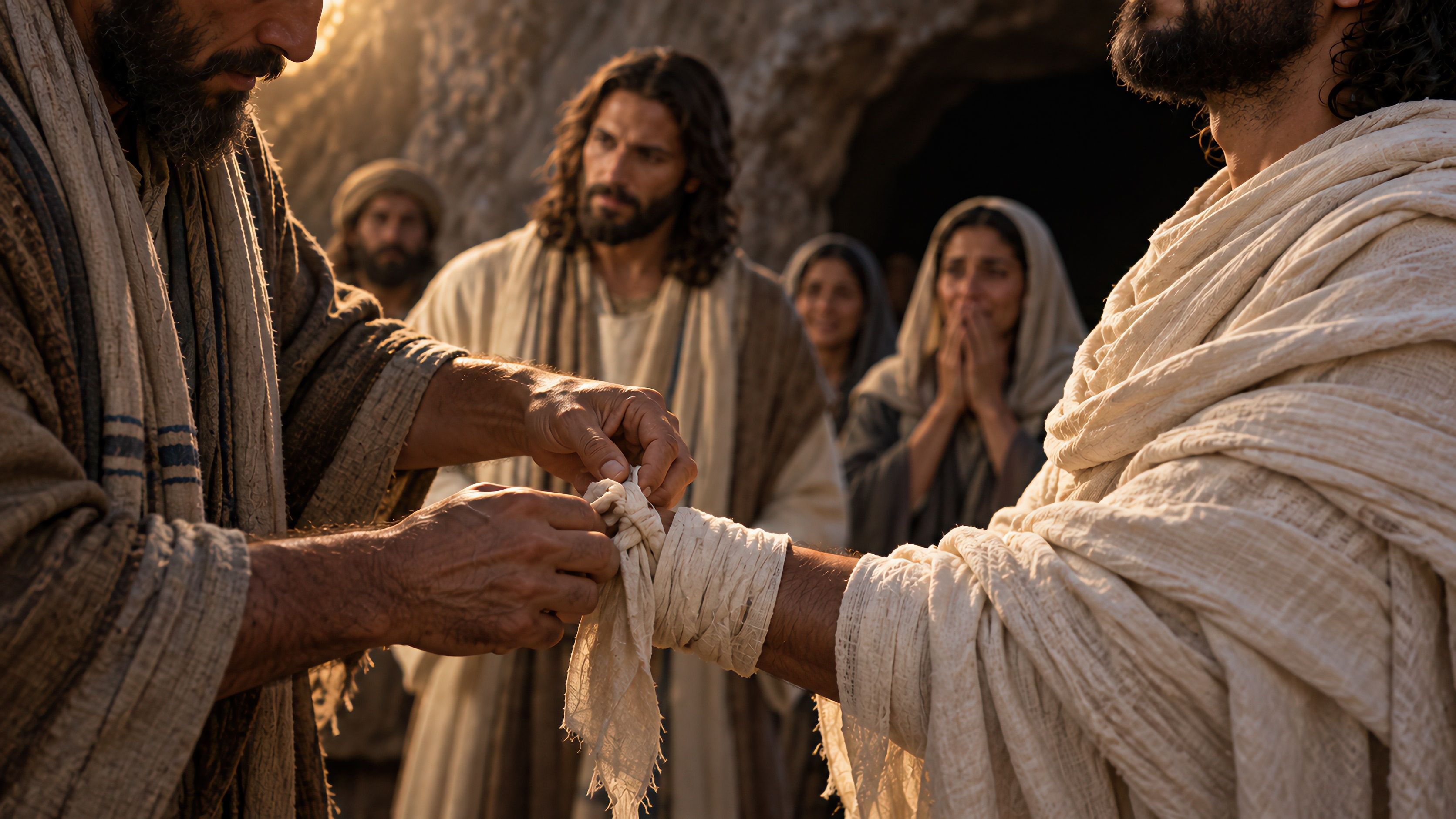
Jesus is teaching here. This is a picture of the Church. It is a group of friends who not only keep confidences to protect each other’s dignity, but, just as importantly, aid each other to be clothed with Christ. This is our stance toward all people – those who outwardly appear put together, and those whose train-wreck lives appear as messy and dead as they really are.
I realize this has barely scratched the surface, and it may raise difficult questions. However, I trust they are good questions that will prompt an invitation to our Churches to join the battle in this epidemic we have in common. In addition to our need for a blueprint and tools for recovery, we do so in this assurance: We have the answer. The Church still moves stones so that Jesus has access. God still raises sleepers from the dead. The Church still helps people dress in dignity.
[1] Process addictions include, but are not limited to, obsessive-compulsive behaviors such as gambling, pornography, shopping, Internet use, etc.
Greg has actively participated in the recovery field since 1987 and has been involved in ministry as a preaching teacher since 1994. Greg served for seven years as the leader of Celebrate Recovery at College Heights Christian Church, four years at God’s Resort as Life Transition Coordinator, and worked as a Certified Peer Specialist at the Recovery Outreach Community Center in Joplin, MO. Greg is currently the founder of In the Boat Recovery, LLC, offering seminars for churches on addiction and recovery, guidance and care for individuals and families, and is preparing to publish his first book, “The Spirit in The Steps.”